Lewiston Cornsalad (Valeriana locusta)
Formerly Valerianella olitoria, Valerianella locusta, Fedia locusta
Give Lewiston cornsalad full sun and well-drained soil. Water it regularly, from medium to wet. It is described as fast growing. A soil pH of 6 to 7 is preferred. In the lower 48 states its native status is introduced. It can be started from seed. Pet toxicity for cats and dogs is not documented here.
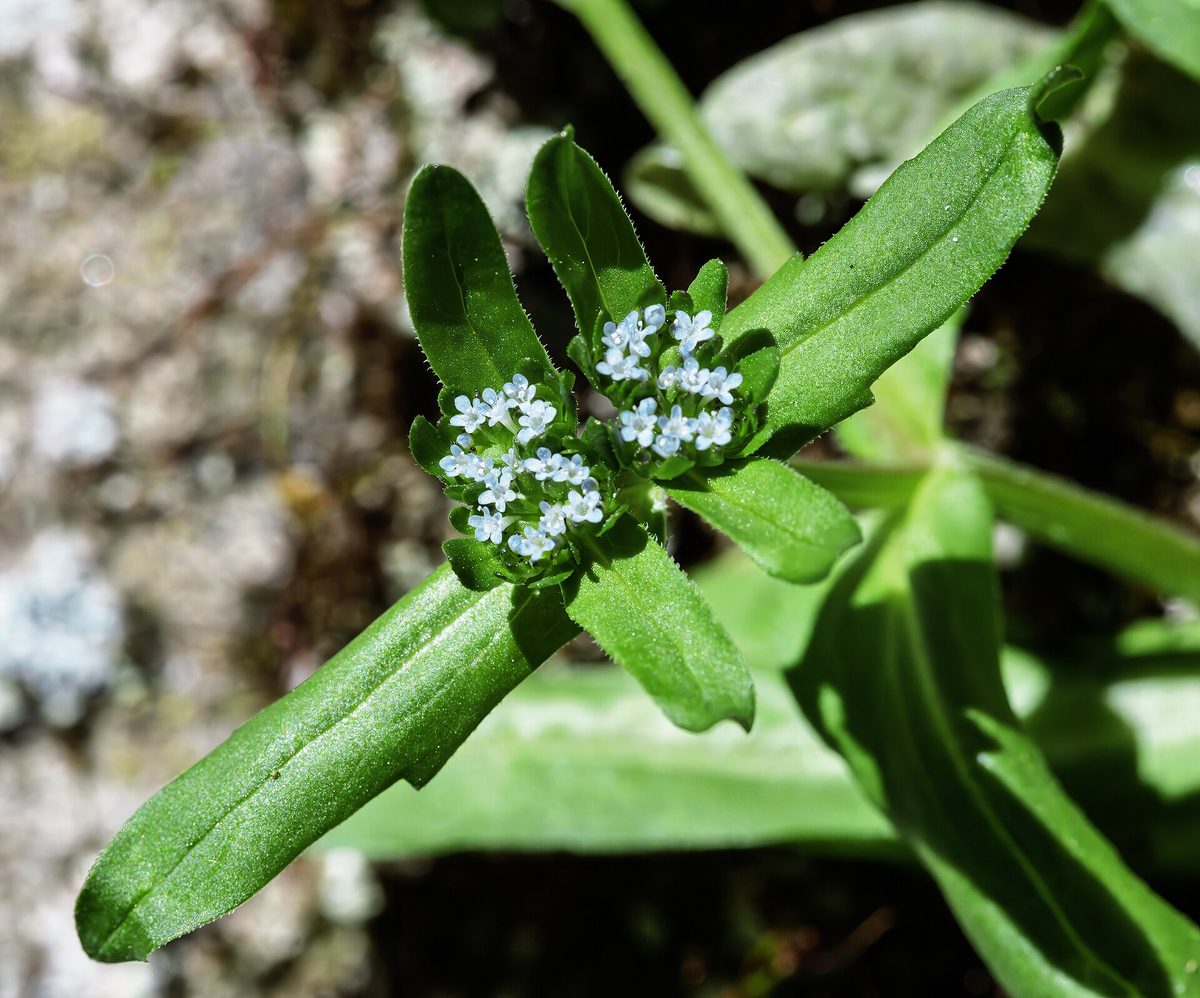
Photo: Didier Descouens, CC BY-SA 4.0 via Wikimedia Commons

Quick facts
| Light: | Full sun11 source |
|---|---|
| Water: | Medium to wet11 source |
| Soil: | Well drained; pH 6–711 source |
| Growth rate: | Rapid11 source |
| Cats: | Not documented by major sources |
| Dogs: | Not documented by major sources |
| Native range: | ALB, ALG, AUT, BGM, BLR, BLT, BUL, COR, CZE, DEN, EAI, FIN, FRA, GER, GRB, GRC, HUN, IRE, ITA, KRY, LBS, MOR, NCS, NET, NOR, POL, POR, ROM, RUC, RUE, RUS, RUW, SAR, SIC, SPA, SWE, SWI, TCS, TUE, TUR, UKR, YUG3 |
| Family: | Caprifoliaceae |
How much light does a Lewiston Cornsalad need?
Lewiston cornsalad is an outdoor plant that prefers full sun, and full sun is the only light level recorded for it. Choose a location that receives full sunlight. The plant is also described as fast growing and not susceptible to many production problems. Soil in that sunny spot should be well drained, with a pH between 6 and 7.
- Light: Full sun1
How often to water a Lewiston Cornsalad
Water Lewiston cornsalad regularly, giving it 1 to 2 inches (2.5 to 5 cm) per week. Its recorded water need runs from medium to wet. The low end of that range is medium and the high end is medium wet. Pair that water with soil that is well drained. Full sun is the recorded light level for the same bed.
- Water: Medium to wet1
Best soil for a Lewiston Cornsalad
Lewiston cornsalad prefers fertile soil that is well drained and rich in organic matter. Drainage is recorded as well drained. The preferred pH is 6.0 to 7.0 for best growth. A pH below 6 or above 7 falls outside the recorded range. Pair that soil with regular water, 1 to 2 inches (2.5 to 5 cm) per week. Full sun is the recorded light level for the same bed. The plant is described as fast growing.
Hardiness and temperature
The lowest temperature recorded for Lewiston cornsalad is -0.4 °F (-18 °C). That minimum is the temperature figure recorded for it. Outdoors, the plant prefers full sun and well-drained soil. It is described as fast growing. Its soil pH preference is 6 to 7. Its water need runs from medium to wet.
- Minimum temperature: -0.4 °F (-18 °C)2
Winter care
For winter, the recorded minimum temperature for Lewiston cornsalad is -0.4 °F (-18 °C). Compare that figure with the lowest temperatures your site reaches. The plant prefers full sun and well-drained soil. Its water need is medium to wet. Its soil pH preference is 6 to 7. Fast growth is recorded for the species.
- Minimum temperature: -0.4 °F (-18 °C)2
How to propagate a Lewiston Cornsalad
Lewiston cornsalad is propagated from seed. Seed is the only propagation method recorded for it. The plant is easy to establish from a seeding, and it eventually forms small rosettes. A seeding belongs in a bed with full sun and well-drained soil. Fast growth is recorded for the species.
- Propagation: Seed2
Common problems
Aphids, cabbage loopers, flea beetles, leaf miners and slugs are the pests recorded for Lewiston cornsalad. Alternaria leaf spot and damping off are the recorded diseases. Five pests and two diseases are recorded in total. The plant is described as not susceptible to many production problems. It is also described as fast growing.
| Problem | Kind |
|---|---|
| Aphids | Pest |
| Cabbage loopers | Pest |
| Flea beetles | Pest |
| Leaf miners | Pest |
| Slugs and snails | Pest |
| Alternaria leaf spot | Disease |
| Damping off | Disease |
Is Lewiston Cornsalad toxic to cats and dogs?
Recommended supplies
- Soil: a free-draining mix, and a pot with a drainage hole.
Questions and answers
- How much sun does Lewiston cornsalad need?
- It prefers full sun, and full sun is the only light level recorded for it. Soil in that spot should be well drained, with a pH from 6 to 7. The plant is described as fast growing.
- How much water does it need, and which pests should I watch for?
- Give it 1 to 2 inches (2.5 to 5 cm) of water each week, applied regularly. Slugs, aphids, leaf miners, flea beetles and cabbage loopers are all recorded as pests. Alternaria leaf spot and damping off are the recorded diseases.
- Is Lewiston cornsalad native to the United States?
- In the lower 48 states its native status is introduced. Its recorded native range lists 42 regions, including France, Germany, Italy, Spain and Morocco. Its recorded minimum temperature is -0.4 °F (-18 °C).
Sources
- Utah State University Extension. https://extension.usu.edu/yardandgarden/research/lambs-lettuce-in-the-garden. Accessed 21 October 2026.
- Oregon State University Extension Service. https://extension.oregonstate.edu/catalog/pnw-548-winter-vegetable-production-small-farms-gardens-west-cascades. Accessed 30 October 2026.
- Royal Botanic Gardens, Kew (World Checklist of Vascular Plants). https://sftp.kew.org/pub/data-repositories/WCVP/wcvp.zip. Accessed 4 June 2026.
How this page was made
- Written with AI assistance from the sources listed on this page. AI is never the source of a fact.