Blessed Milkthistle (Silybum marianum)
Formerly Silybum mariae, Carduus mariae, Mariana mariana
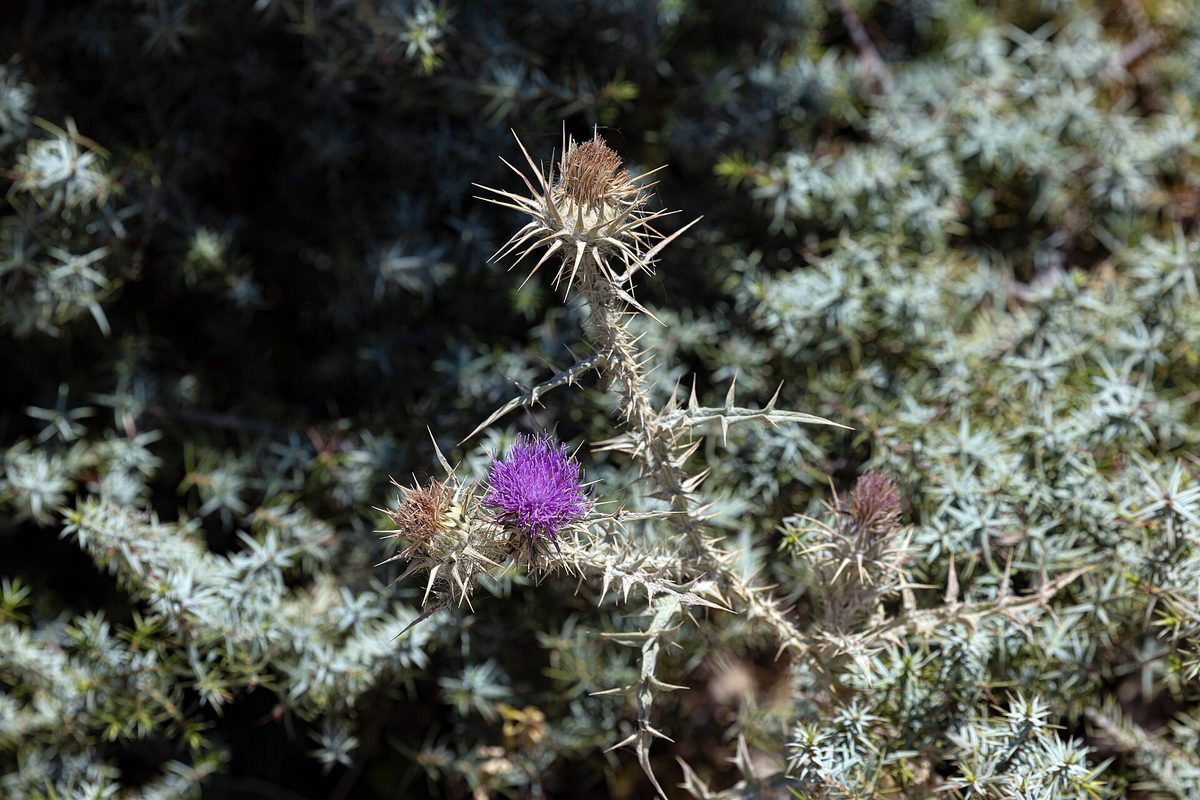
Photo: Tsui, CC BY-SA 4.0 via Wikimedia Commons

Quick facts
| Bloom: | Pink and purple11 source |
|---|---|
| Cats: | Not documented by major sources |
| Dogs: | Not documented by major sources |
| Native range: | AFG, ALB, ALG, AZO, BAL, BUL, CNY, COR, CYP, EAI, EGY, ETH, FRA, GRC, GST, IND, IRN, IRQ, ITA, KAZ, KRI, KUW, LBS, LBY, MDR, MOR, NCS, NEP, PAK, PAL, POR, SAR, SAU, SIC, SIN, SPA, TCS, TKM, TUE, TUN, TUR, TZK, UZB, WHM, WSA, YEM, YUG2 |
| Family: | Asteraceae |
How to propagate a Blessed Milkthistle
Blessed milkthistle, Silybum marianum, reproduces by seed. Seed is the only propagation method recorded for this species. Its flower heads are pink to purple, nearly round and shiny, and they sit on long stalks. The record lists seed alone, with no cuttings, division or other method.
- Propagation: Seed1
Is Blessed Milkthistle toxic to cats and dogs?
Not documented by major sources
Not documented by major sources
Questions and answers
- How does blessed milkthistle, Silybum marianum, reproduce?
- Blessed milkthistle reproduces by seed. Seed is the only propagation method recorded for this species. Sowing depth and timing are not documented on this page.
- What color are the flowers of blessed milkthistle?
- The flower heads are pink to purple. They are nearly round and shiny, with long stalks. The recorded bloom colors are pink and purple.
- Is blessed milkthistle native to the United States?
- In the lower 48 states, it is listed as introduced rather than native. Its native range record includes France, Greece, Italy and Spain, among many other regions.
Sources
- UC Statewide Integrated Pest Management Program. https://ipm.ucanr.edu/weeds-identification-gallery/blessed-milkthistle/. Accessed 28 October 2026.
- Royal Botanic Gardens, Kew (World Checklist of Vascular Plants). https://sftp.kew.org/pub/data-repositories/WCVP/wcvp.zip. Accessed 4 June 2026.
How this page was made
- Written with AI assistance from the sources listed on this page. AI is never the source of a fact.