Velvet Bean (Mucuna pruriens)
Formerly Dolichos pruriens, Labradia pruriens, Negretia pruriens
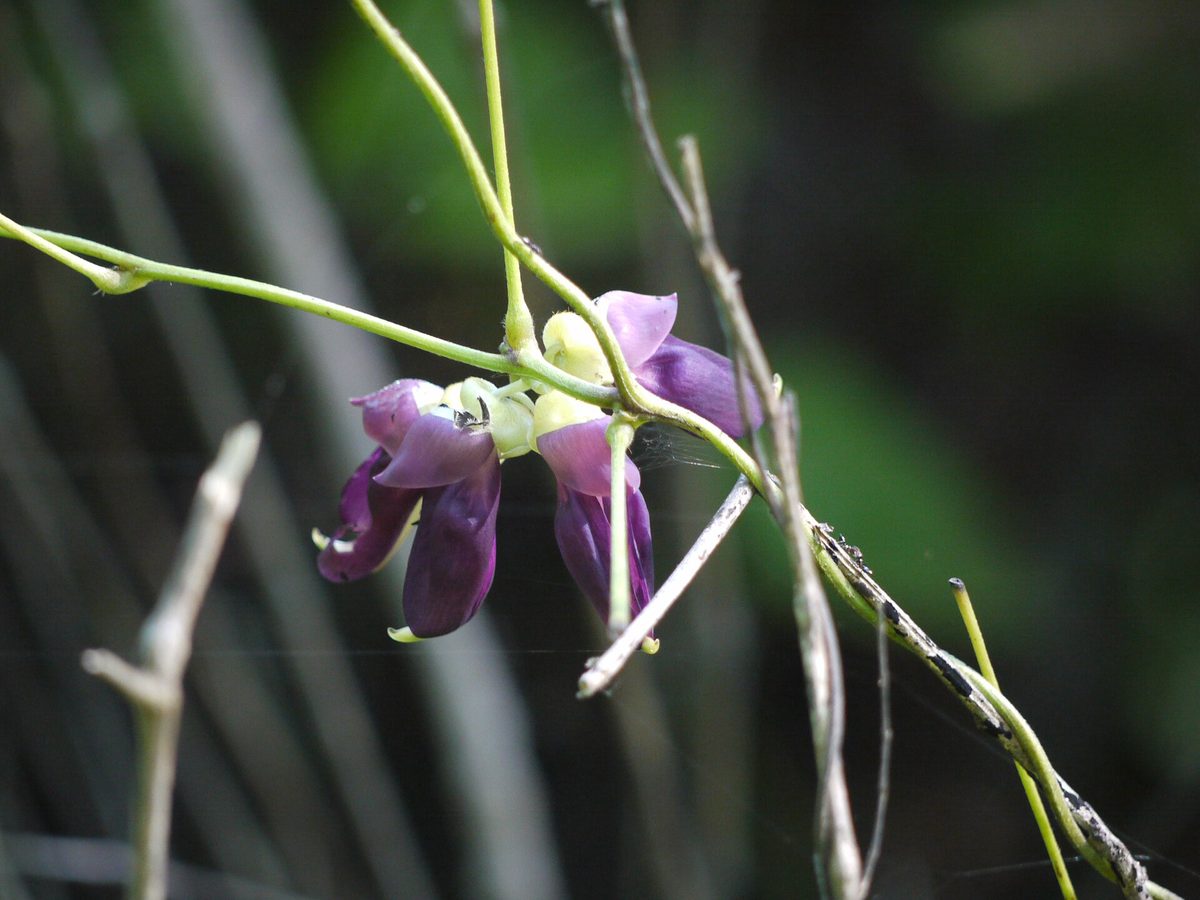
Photo: Dinesh Valke from Thane, India, CC BY-SA 2.0 via Wikimedia Commons

Quick facts
| Soil: | Well drained11 source |
|---|---|
| Size: | 3–8 ft (0.91–2.44 m) × 1–3 ft (0.3–0.91 m)11 source |
| Growth rate: | Rapid111 source |
| Cats: | Not documented by major sources |
| Dogs: | Not documented by major sources |
| Native range: | AND, ANG, ASS, BAN, BEN, BKN, BUR, CAF, CBD, CHA, CHC, CHH, CHS, CMN, COM, CON, CVI, EHM, EQG, GAB, GGI, GHA, GNB, GUI, IND, IVO, KEN, LBR, LDV, MDG, MLW, MLY, MOL, MOZ, MYA, NAT, NCB, NEP, NGA, PAK, PHI, SEN, SIE, SOL, SRL, SUD, TAN, THA, TOG, TVL, UGA, VIE, WHM, XMS, YEM, ZAI, ZAM, ZIM3 |
| Family: | Fabaceae |
Best soil for a Velvet Bean
Velvet bean (Mucuna pruriens) is recorded as growing in soil with good drainage. For outdoor growing, its light entry is full sun, meaning six or more hours of direct sunlight a day. Plants reach 3–8 ft (0.91–2.44 m) tall, with a spread of 1–3 ft (0.3–0.91 m).
- Soil drainage: Well drained1
How to propagate a Velvet Bean
Seed is the propagation method on file for velvet bean. The listing describes it as a spring-sown, summer cover crop. It is classed as a vine and an annual, and its growth rate is rapid. Mature plants are about 1–3 ft (0.3–0.91 m) wide.
- Propagation: Seed1
Common problems
Recorded pests of velvet bean include the velvetbean caterpillar, kudzu bug, brachyplatys subaeneus, ceratothripoides brunneus and eutetranychus banksi. Naupactus leucoloma, spodoptera eridania and meloidogyne ethiopica are also on the list. Velvetbean hosts the velvetbean caterpillar and kudzu bug, both of which can damage soybeans. The disease recorded is cowpea mild mottle virus.
| Problem | Kind |
|---|---|
| Velvetbean caterpillar | Pest |
| Kudzu bug | Pest |
| Brachyplatys subaeneus | Pest |
| Ceratothripoides brunneus | Pest |
| Eutetranychus banksi | Pest |
| Naupactus leucoloma | Pest |
| Spodoptera eridania | Pest |
| Meloidogyne ethiopica | Pest |
| Cowpea mild mottle virus | Disease |
Is Velvet Bean toxic to cats and dogs?
Recommended supplies
- Soil: a free-draining mix, and a pot with a drainage hole.
Questions and answers
- How big does velvet bean grow?
- Velvet bean reaches 3–8 ft (0.91–2.44 m) tall and 1–3 ft (0.3–0.91 m) wide. Its growth rate is listed as rapid. It is classed as a climbing annual vine.
- How much sun does velvet bean need outdoors?
- Its outdoor light entry is full sun, which means six or more hours of direct sunlight a day. The soil entry on file is good drainage. Seed is the propagation method recorded for the plant.
- Which pests and diseases affect velvet bean?
- The velvetbean caterpillar and kudzu bug are recorded, and both can damage soybeans. The disease recorded is cowpea mild mottle virus. Other recorded pests include naupactus leucoloma and spodoptera eridania.
Sources
- NC State Extension Gardener Plant Toolbox. https://plants.ces.ncsu.edu/plants/mucuna-pruriens/. Accessed 14 October 2026.
- EPPO Global Database. https://gd.eppo.int/taxon/MUCPR/pests. Accessed 14 October 2026.
- Royal Botanic Gardens, Kew (World Checklist of Vascular Plants). https://sftp.kew.org/pub/data-repositories/WCVP/wcvp.zip. Accessed 4 June 2026.
How this page was made
- Written with AI assistance from the sources listed on this page. AI is never the source of a fact.