Barbados Cherry (Malpighia emarginata)
Formerly Malpighia retusa, Malpighia umbellata, Malpighia berteroana
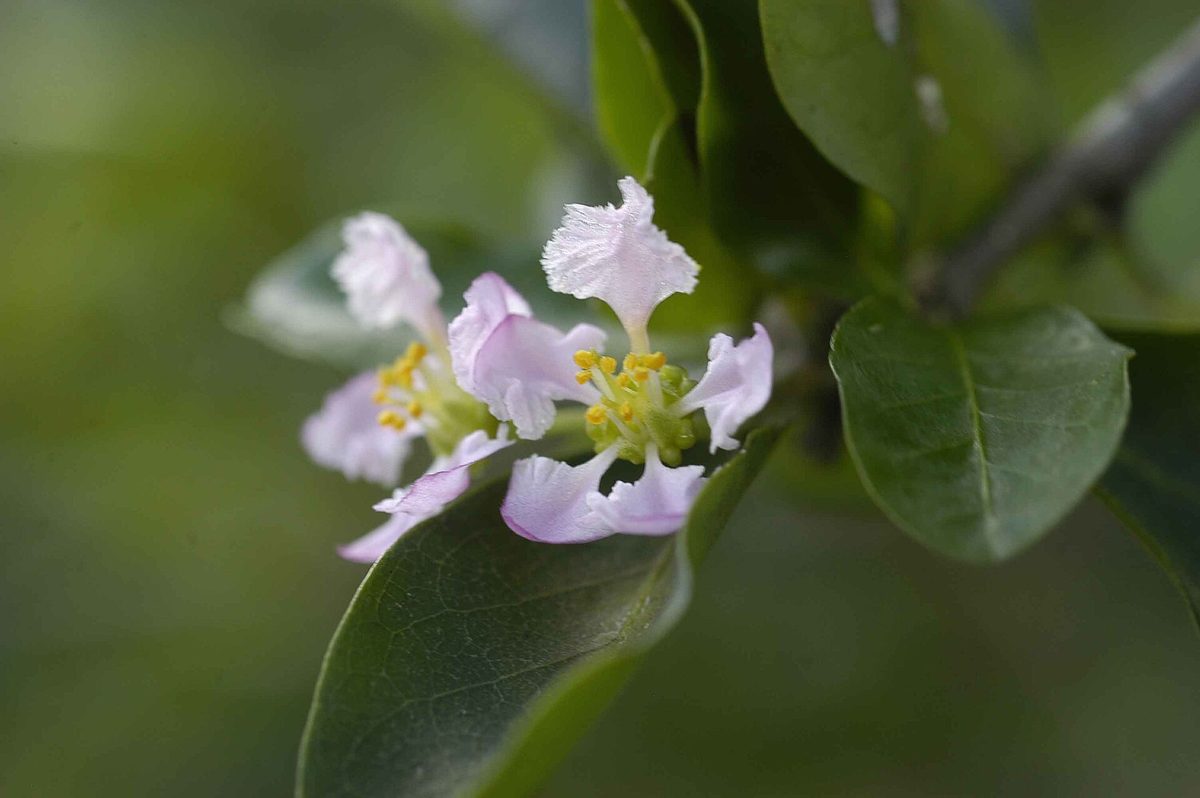
Photo: CostaPPPR, CC BY-SA 4.0 via Wikimedia Commons

Quick facts
| Size: | 10–12 ft (3.05–3.66 m) × 10–15 ft (3.05–4.57 m)11 source |
|---|---|
| Growth rate: | Slow11 source |
| Bloom: | Pink11 source |
| Cats: | Not documented by major sources |
| Dogs: | Not documented by major sources |
| Native range: | BLZ, CLM, ELS, GUA, HON, MXE, MXG, MXN, MXS, MXT, NIC2 |
| Family: | Malpighiaceae |
How to propagate a Barbados Cherry
You can propagate Barbados cherry, Malpighia emarginata, by layering or by stem cuttings. Layering and cuttings are the two methods named for this plant. The growth rate is slow. A mature plant reaches 10–12 ft (3.05–3.66 m) in height and 10–15 ft (3.05–4.57 m) in spread. Its USDA hardiness zones run from 9b through 11b.
- Propagation: Layering and stem cuttings1
Common problems
Four kinds of pest are recorded for Barbados cherry: nematodes, whiteflies, scale insects and plant bugs. These pests will attack and deform the fruit. No cited source records a disease for this plant. Disease information is not documented for Barbados cherry yet.
- Common pests: nematodes, whiteflies, scale insects and plant bugs1
| Problem | Kind |
|---|---|
| Nematodes | Pest |
| Whiteflies | Pest |
| Scale insects | Pest |
| Plant bugs | Pest |
Is Barbados Cherry toxic to cats and dogs?
Not documented by major sources
Not documented by major sources
Questions and answers
- How big does Barbados cherry get?
- A mature Barbados cherry reaches 10–12 ft (3.05–3.66 m) in height and 10–15 ft (3.05–4.57 m) in spread. Its growth rate is slow. Its flowers are pink.
- Which USDA zones and light suit Barbados cherry outdoors?
- Its hardiness zones run from 9b through 11b. Outdoors it takes full sun and part shade, with full sun preferred. In the United States it is listed as introduced in the lower 48 states and in Puerto Rico.
- How do you propagate Barbados cherry, and which pests affect it?
- You can propagate it by layering or by stem cuttings. The pests recorded for it are nematodes, whiteflies, scale insects and plant bugs. These pests will attack and deform the fruit.
Sources
- University of Florida IFAS Extension (EDIS). https://ask.ifas.ufl.edu/publication/FP390. Accessed 21 October 2026.
- Royal Botanic Gardens, Kew (World Checklist of Vascular Plants). https://sftp.kew.org/pub/data-repositories/WCVP/wcvp.zip. Accessed 4 June 2026.
How this page was made
- Written with AI assistance from the sources listed on this page. AI is never the source of a fact.