Sugar Apple (Annona squamosa)
Formerly Annona cinerea, Xylopia glabra, Annona asiatica
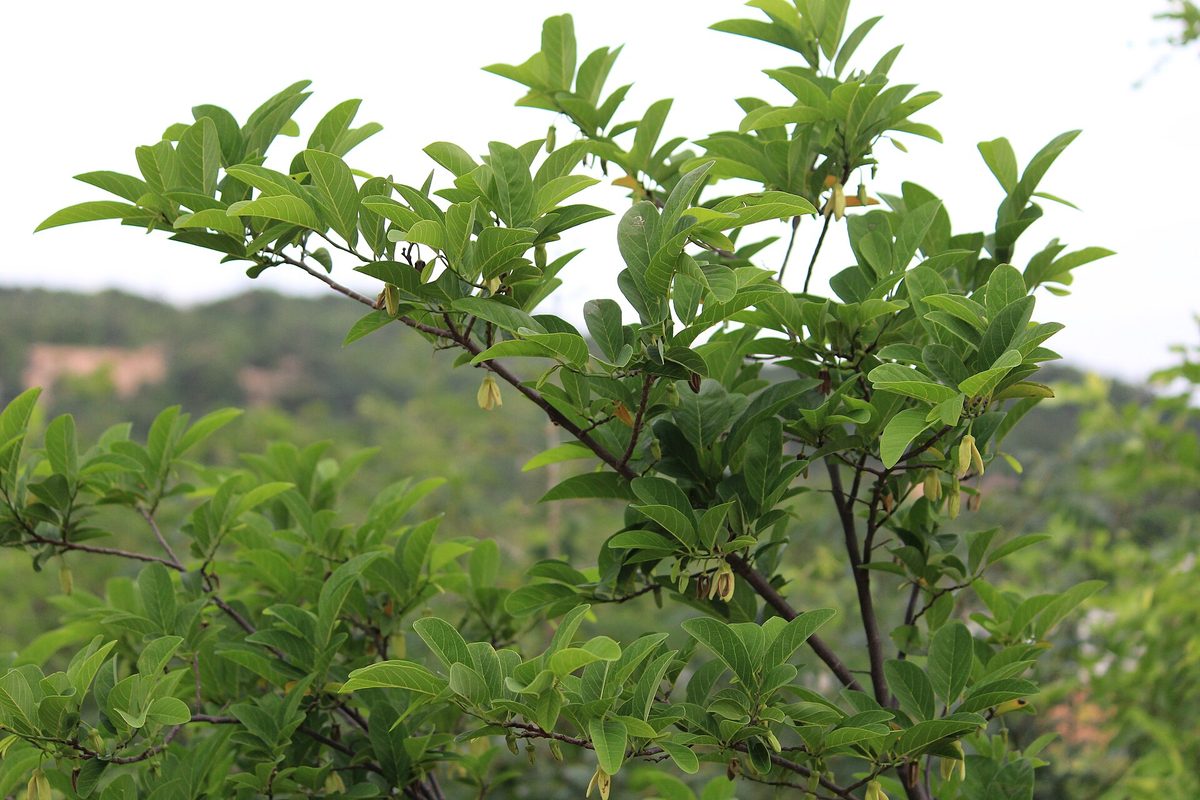
Photo: Shanmugamp7, CC BY-SA 3.0 via Wikimedia Commons

Quick facts
| Soil: | Well drained and occasionally dry11 source |
|---|---|
| Minimum temperature: | 28.4 °F (-2 °C)21 source |
| Size: | 15.1–20 ft (4.6–6.1 m) × 15.1–20 ft (4.6–6.1 m)11 source |
| Bloom: | Green11 source |
| Cats: | Not documented by major sources |
| Dogs: | Not documented by major sources |
| Native range: | BLZ, CLM, COS, ELS, GUA, HON, MXC, MXE, MXG, MXN, MXS, MXT, NIC, PAN4 |
| Family: | Annonaceae |
Best soil for a Sugar Apple
Sugar apple is well adapted to most well-drained soil types. The drainage record lists the soil as well drained and occasionally dry. Sugar apple trees should be planted in full sun. The source says full sun is best for growth and fruit production. Mature height is rarely more than 15 to 20 ft (4.6–6.1 m). Spread is rarely more than 15 to 20 ft (4.6–6.1 m) as well. No cited source records a preferred soil pH for this species, so that value is not documented here.
- Soil drainage: Well drained and occasionally dry1
Temperature and humidity
Sugar apple has a recorded minimum temperature of 28.4 °F (-2 °C). The source says the tree may tolerate short periods of 28 to 29 °F. A frost that falls below 28 °F is outside the range the source describes. Humidity for this species is listed as high. Aim for 70% or higher relative humidity while the tree is flowering. The same figure applies during fruit set.
How to propagate a Sugar Apple
Sugar apple is generally propagated by seed. Grafting is also listed as a propagation method. The propagation record names two methods, seed and grafting. Whichever method you choose, leave room for a tree that rarely exceeds 15 to 20 ft (4.6–6.1 m) in height and spread.
- Propagation: Seed and grafting1
Common problems
Recorded pests of sugar apple include aleurocanthus woglumi, aleurodicus dispersus, maconellicoccus hirsutus, planococcus lilacinus and oligonychus punicae. The pest record also names anastrepha suspensa, bactrocera dorsalis, ceratitis capitata and xylosandrus compactus. Recorded diseases are colletotrichum fructicola, phytophthora nicotianae, phymatotrichopsis omnivora and ralstonia solanacearum.
- Common pests: aleurocanthus woglumi, aleurodicus dispersus, maconellicoccus hirsutus, planococcus lilacinus, oligonychus punicae, anastrepha suspensa, bactrocera dorsalis, ceratitis capitata and xylosandrus compactus3
- Common diseases: colletotrichum fructicola, phytophthora nicotianae, phymatotrichopsis omnivora and ralstonia solanacearum3
| Problem | Kind |
|---|---|
| Aleurocanthus woglumi | Pest |
| Aleurodicus dispersus | Pest |
| Maconellicoccus hirsutus | Pest |
| Planococcus lilacinus | Pest |
| Oligonychus punicae | Pest |
| Anastrepha suspensa | Pest |
| Bactrocera dorsalis | Pest |
| Ceratitis capitata | Pest |
| Xylosandrus compactus | Pest |
| Colletotrichum fructicola | Disease |
| Phytophthora nicotianae | Disease |
| Phymatotrichopsis omnivora | Disease |
| Ralstonia solanacearum | Disease |
Is Sugar Apple toxic to cats and dogs?
Recommended supplies
- Soil: a free-draining mix, and a pot with a drainage hole.
- Humidity: it wants humid air; a pebble tray or a humidifier is the usual fix.
Questions and answers
- What kind of light does a sugar apple need outdoors?
- Sugar apple trees should be planted in full sun. The source says full sun gives the best growth and fruit production. The light record lists full sun as the preferred and only value.
- How cold can a sugar apple tree get?
- The recorded minimum temperature is 28.4 °F (-2 °C). The source says the tree may tolerate short periods of 28 to 29 °F. Humidity is listed as high for this species.
- What color are sugar apple flowers, and how big does the tree grow?
- The listed bloom color is green, and the flowers have three fleshy petals. Trees rarely exceed 15 to 20 ft (4.6–6.1 m) in height. Their spread is rarely more than 15 to 20 ft (4.6–6.1 m) as well.
Sources
- University of Florida IFAS Extension (EDIS). https://ask.ifas.ufl.edu/publication/MG330. Accessed 14 October 2026.
- University of Florida IFAS Extension (EDIS). https://ask.ifas.ufl.edu/mg330. Accessed 15 October 2026.
- EPPO Global Database. https://gd.eppo.int/taxon/ANUSQ/pests. Accessed 14 October 2026.
- Royal Botanic Gardens, Kew (World Checklist of Vascular Plants). https://sftp.kew.org/pub/data-repositories/WCVP/wcvp.zip. Accessed 4 June 2026.
How this page was made
- Written with AI assistance from the sources listed on this page. AI is never the source of a fact.