Rosarypea (Abrus precatorius)
Formerly Abrus minor, Glycine abrus, Zaga latifolia
The facts on file do not cover indoor light or watering for rosarypea, Abrus precatorius. Outdoors, it grows in full sun, meaning six or more hours of direct sunlight a day. It is a vine and herbaceous perennial with a rapid growth rate. The plant is toxic to both cats and dogs.
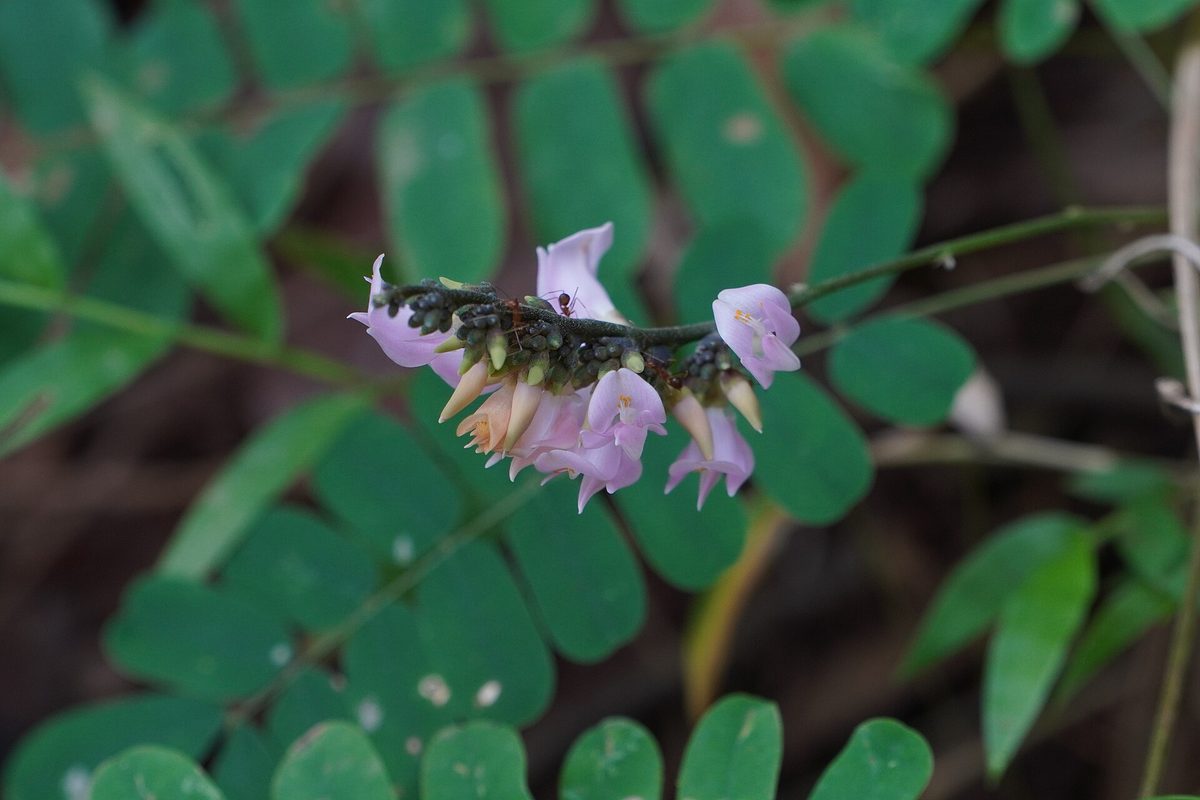
Photo: Vengolis, CC BY-SA 4.0 via Wikimedia Commons

Quick facts
| Growth rate: | Rapid41 source |
|---|---|
| Bloom: | Pink, purple and white41 source |
| Cats: | Toxic to cats (1 source) 2 |
| Dogs: | Toxic to dogs 23 |
| Native range: | ALD, AND, ANG, ASS, BAN, BEN, BKN, BOT, BUR, CAF, CBD, CHA, CHC, CHS, CMN, COM, CON, CPP, CPV, CVI, EHM, EQG, ERI, ETH, GAB, GAM, GGI, GNB, GUI, IND, IVO, KEN, LAO, LBR, MDG, MLI, MLW, MLY, MOZ, MTN, MYA, NAM, NAT, NCB, NEP, NGR, NSW, NTA, PAK, QLD, RWA, SAU, SCS, SEN, SEY, SOM, SRL, SUD, SWZ, TAI, TAN, THA, TOG, TVL, UGA, VIE, WAU, WHM, YEM, ZAI, ZAM, ZIM5 |
| Family: | Fabaceae |
Common problems
Rosarypea has two recorded pests: coffee berry borer and glassy winged sharpshooter. Coffee berry borer is also listed under the scientific name Hypothenemus hampei. Both pests appear in the records for this species. This pest list belongs to a vine that grows at a rapid rate and takes full sun outdoors.
- Common pests: coffee berry borer and glassy winged sharpshooter1
| Problem | Kind |
|---|---|
| Coffee berry borer | Pest |
| Glassy winged sharpshooter | Pest |
Is Rosarypea toxic to cats and dogs?
The ASPCA lists rosarypea as toxic to cats. The ASPCA lists it as toxic to dogs as well. The Pet Poison Helpline describes the seeds, or peas, of this perennial vine as very toxic and says they contain toxalbumins. The plant is a vine and a herbaceous perennial that the NC State Extension Gardener Plant Toolbox calls poisonous. The Pet Poison Helpline names the seeds in its entry. The position is the same for both animals: toxic.
Questions and answers
- Is rosarypea toxic to cats and dogs?
- Rosarypea is recorded as toxic to cats and toxic to dogs by the ASPCA. The Pet Poison Helpline calls the seeds of this vine very toxic and says they contain toxalbumins.
- How much sun does rosarypea need outdoors?
- Outdoors, rosarypea is recorded as preferring full sun, which means six or more hours of direct sunlight a day. Full sun is the only outdoor light level recorded for it. It is a vine with a rapid growth rate.
- What color are the flowers of rosarypea?
- The flowers are recorded as pink, purple and white. One source describes them as small, white to violet-pink, and clustered in the axils of the leaves. The plant is a vine and herbaceous perennial.
Sources
- EPPO Global Database. https://gd.eppo.int/taxon/ABRPR/pests. Accessed 14 October 2026.
- ASPCA Animal Poison Control Center. https://www.aspca.org/pet-care/aspca-poison-control/toxic-and-non-toxic-plants/rosary-pea. Accessed 14 October 2026.
- Pet Poison Helpline. https://www.petpoisonhelpline.com/poison/precatory-bean/. Accessed 14 October 2026.
- NC State Extension Gardener Plant Toolbox. https://plants.ces.ncsu.edu/plants/abrus-precatorius/. Accessed 14 October 2026.
- Royal Botanic Gardens, Kew (World Checklist of Vascular Plants). https://sftp.kew.org/pub/data-repositories/WCVP/wcvp.zip. Accessed 4 June 2026.
How this page was made
- Written with AI assistance from the sources listed on this page. AI is never the source of a fact.